You’re sitting at a stoplight, waiting for traffic to move, when you notice something different. Your engine continues running instead of automatically shutting off like it normally does. At first, you might not think much of it, but after several days of the same behavior, you begin wondering whether something is wrong with your vehicle.
If your auto start stop system has suddenly stopped working, there are several possible explanations. While this feature is designed to reduce unnecessary engine idling and improve fuel efficiency, it relies on multiple vehicle systems to operate correctly.
Sometimes, the system temporarily disables itself because certain operating conditions have not been met. In other cases, a weak battery, charging system problem, faulty sensor, or another mechanical or electrical issue may prevent it from functioning.
Understanding why your auto start stop system is no longer working can help you determine whether the behavior is normal or whether your vehicle needs professional attention.
What Is an Auto Start Stop System?
An auto start stop system is a feature found in many modern vehicles that automatically shuts off the engine when the vehicle comes to a complete stop under appropriate conditions.
For example, when you stop at a traffic light and hold the brake pedal, the system may shut off the engine to reduce fuel consumption. When you release the brake pedal or perform another action that signals you’re ready to move, the engine automatically restarts.
Although the exact operation varies between manufacturers, these systems typically monitor several factors before allowing the engine to shut off.
These can include:
- Battery charge and condition
- Engine operating temperature
- Outside temperature
- Cabin heating and cooling demands
- Brake pedal position
- Steering wheel movement
- Vehicle speed
- Transmission position
- Electrical system demand
If the vehicle determines that the conditions are not appropriate, it may keep the engine running.
This is why an auto start stop system that does not activate is not necessarily malfunctioning.
1. Your Battery Is Weak or Undercharged
One of the most common reasons an auto start stop system stops functioning is insufficient battery charge.
Vehicles equipped with this feature often use batteries designed to handle more frequent engine starting. Depending on the manufacturer and vehicle, these may include enhanced flooded batteries or absorbed glass mat batteries.
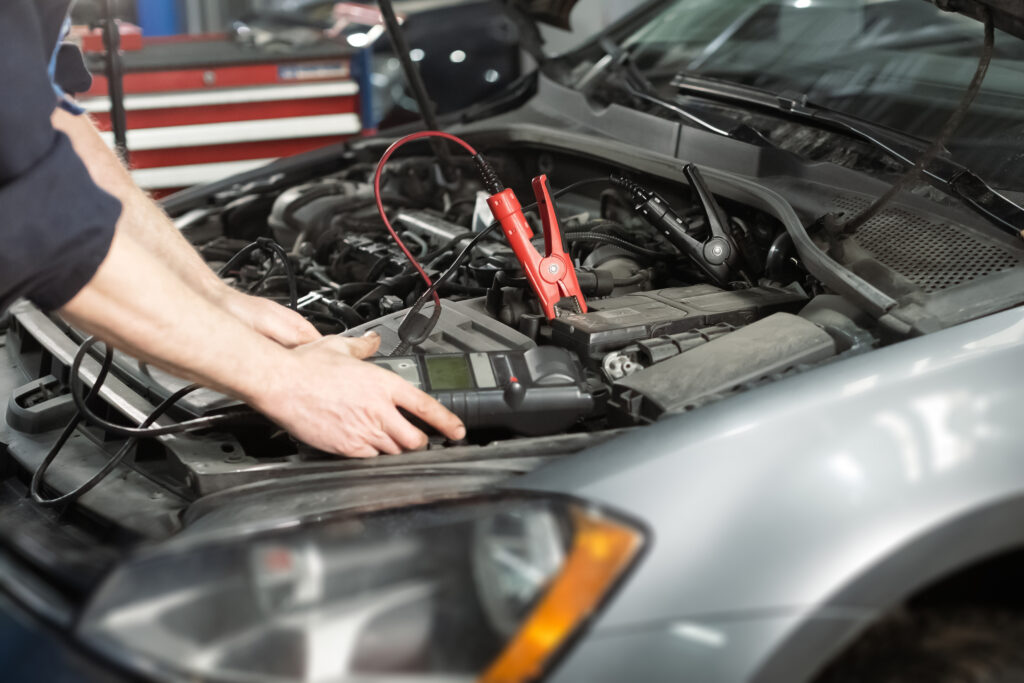
The system needs to know that the battery has enough stored energy to restart the engine reliably.
If the battery is weak, aging, or undercharged, the vehicle may temporarily disable automatic engine shutdown to preserve available power.
Signs your battery may be responsible
You might notice:
- The engine no longer shuts off at stoplights
- The system displays an unavailable message
- Starting becomes slower than usual
- The battery requires occasional jump starts
- Other electrical features behave inconsistently
A battery can still have enough power to start the engine while failing to meet the stricter requirements of the auto start stop system.
This makes battery testing an important part of diagnosing the problem.
2. Cold Weather Is Preventing the System From Activating
Minnesota drivers may notice their auto start stop system behaving differently as temperatures begin dropping.
Cold weather affects battery performance and increases the amount of energy required to start an engine. It can also cause the vehicle to prioritize warming the engine and passenger compartment.
Many manufacturers program their systems to operate only within certain temperature ranges.
If the outside temperature is too low, the engine has not reached its required operating temperature, or the battery is too cold, automatic shutdown may be temporarily unavailable.
This behavior can be completely normal.
However, if the system remains disabled after the vehicle has warmed up and temperatures become milder, further inspection may be necessary.
3. Your Heater or Air Conditioner Is Working Too Hard
Your vehicle’s climate control system can affect whether the auto start stop system activates.
When the engine shuts off, certain heating and cooling functions may become less effective, depending on the vehicle’s design.
If the passenger compartment has not reached the temperature selected on the climate controls, the vehicle may keep the engine running to maintain comfort.
This is especially common when:
- The heater is set to a high temperature
- The air conditioner is working at maximum capacity
- The windshield defroster is operating
- The outside temperature is extremely hot or cold
- The cabin has not reached the desired temperature
For Minnesota drivers, this means the auto start stop system may operate less frequently during colder months, even when nothing is mechanically wrong.
If the feature begins working again once the cabin reaches a comfortable temperature, the system may simply be responding to normal operating conditions.
4. The Engine Has Not Reached Its Operating Temperature
Your engine needs to reach an appropriate operating temperature before certain efficiency features can activate.
If the engine is still cold, the vehicle may prevent automatic shutdown to allow it to warm up properly.
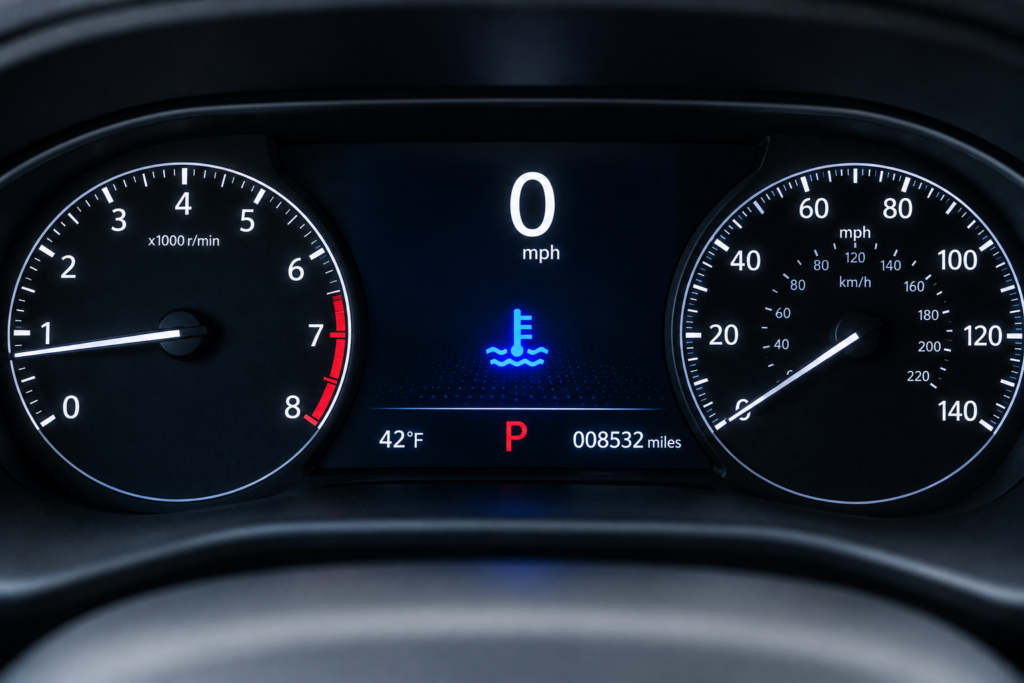
This is particularly noticeable during short trips.
For example, if you drive only a few miles to work or the grocery store, the engine may not have enough time to reach the temperature required for automatic engine shutdown.
Some vehicles also monitor transmission temperature before permitting the feature to operate.
If your auto start stop system works normally after longer drives but rarely activates during short trips, insufficient warmup time may explain the difference.
However, an engine that consistently struggles to reach normal operating temperature may have another issue, such as a thermostat problem.
5. Your Battery Was Recently Replaced
Replacing a battery does not always immediately restore normal auto start stop system operation.
Many modern vehicles use battery management systems that monitor battery condition, charge level, and electrical demand.
After a battery replacement or disconnection, the vehicle may need time to relearn certain battery information.
Some manufacturers also require a battery registration or reset procedure when a new battery is installed.
If this procedure is necessary but not completed, the vehicle may continue making decisions based on outdated battery information.
Another concern is installing the wrong battery type.
Vehicles designed for enhanced flooded or absorbed glass mat batteries may not operate correctly with a conventional replacement that does not meet manufacturer specifications.
If your auto start stop system stopped working after a battery replacement, the battery type, installation, and required programming procedures should be checked.
6. A Sensor Is Providing Incorrect Information
Modern vehicles rely on numerous sensors and control modules to determine whether automatic engine shutdown is appropriate.
The system may monitor information from the battery management system, brake pedal, engine temperature sensors, transmission, and other electronic components.
If a sensor provides inaccurate information, the vehicle may prevent the auto start stop system from activating.
For example, a faulty battery monitoring sensor may cause the vehicle to believe the battery does not have sufficient charge.
A brake pedal sensor problem could prevent the system from recognizing that the vehicle has stopped under the required conditions.
Not every sensor issue will produce an obvious warning light. Some problems may require specialized diagnostic equipment to identify.
7. The Charging System Is Not Operating Correctly
The alternator and charging system help maintain battery charge while the engine is running.
If the charging system is not performing correctly, the battery may remain below the charge level required for automatic engine shutdown.
You might notice additional symptoms, including:
- Battery warning lights
- Repeated battery problems
- Dim or flickering headlights
- Slow engine cranking
- Electrical accessories behaving unusually
A charging system problem should be addressed even if the vehicle continues starting normally.
If the alternator is not adequately charging the battery, the issue could eventually lead to more serious electrical problems or a vehicle that will not start.
8. Certain Driving Conditions Are Preventing Activation
The auto start stop system does not necessarily activate every time you stop.
Depending on the vehicle, the feature may be temporarily unavailable under certain driving conditions.
Examples can include:
- Stopping on a steep incline
- Turning the steering wheel sharply
- Using certain driving modes
- Operating in four wheel drive low
- Towing a trailer
- Not reaching the minimum required speed between stops
- Failing to apply sufficient brake pedal pressure
- Having the hood or driver’s door open
- Not wearing the driver’s seat belt
The specific conditions vary by manufacturer and model.
If the system works normally during some trips but not others, the difference may be related to how or where the vehicle is being driven.
Your owner’s manual can help explain the operating requirements for your particular vehicle.
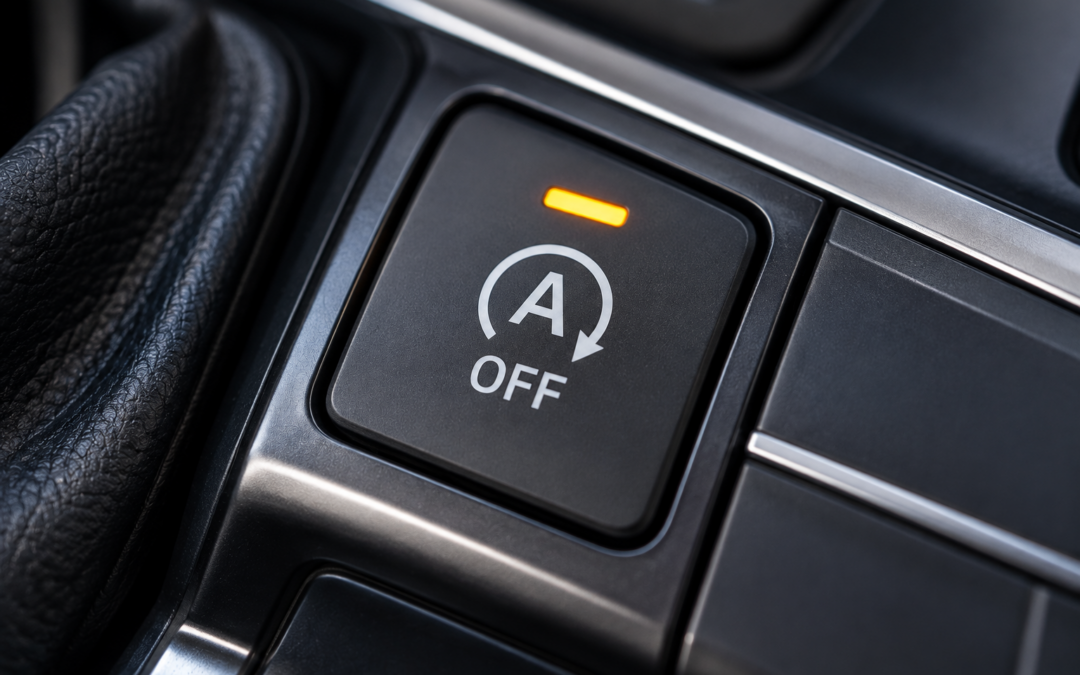
9. The Auto Start Stop System Has Been Turned Off
Sometimes the simplest explanation is that the feature has been manually disabled.
Many vehicles include a button that allows drivers to temporarily turn off automatic engine shutdown.
Depending on the manufacturer, this button may display an A surrounded by a circular arrow, sometimes accompanied by the word OFF.
On some vehicles, the system automatically reactivates the next time the engine starts. Other designs may behave differently.
If your auto start stop system is no longer functioning, check whether it has been disabled through a dashboard button, vehicle setting, or selected driving mode.
If the feature is enabled but still does not operate under normal conditions, further investigation may be necessary.
Why Does My Auto Start Stop System Say Unavailable?
Some vehicles display a message explaining that automatic engine shutdown is temporarily unavailable.
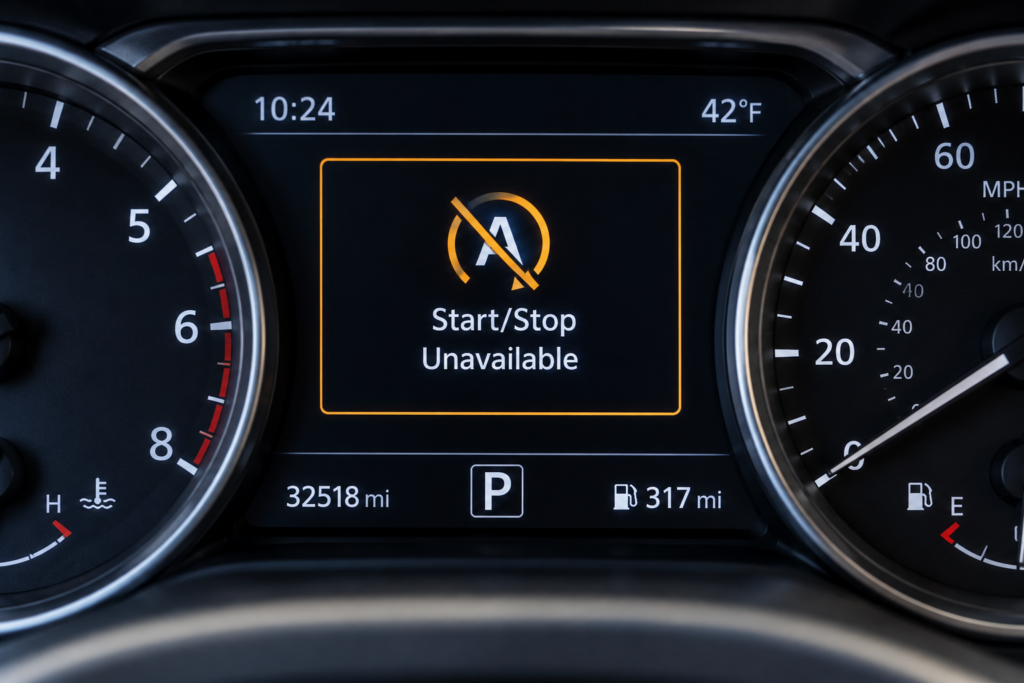
The exact wording varies by manufacturer.
You might see messages indicating that the system is unavailable, not ready, or disabled because of battery charge, engine temperature, or climate control demand.
These messages do not always indicate a malfunction.
However, a message that remains present under normal driving conditions may point to a problem that needs diagnosis.
Some vehicles provide additional information through the instrument cluster or vehicle information display.
Checking the owner’s manual can help you understand what a particular message means.
Is It Bad to Drive With the Auto Start Stop System Not Working?
In many cases, a vehicle can continue operating normally even when the auto start stop system is temporarily unavailable.
The main difference may be that the engine continues idling at stoplights instead of shutting off automatically.
This can reduce the fuel savings normally provided by the feature.
However, the reason the system stopped working matters.
If the feature is disabled because of cold weather, cabin temperature demands, or another normal operating condition, there may be no repair needed.
If it has stopped functioning because of a weak battery, charging system problem, or electrical malfunction, ignoring the underlying issue could eventually lead to starting difficulties or other vehicle problems.
If warning lights appear or the engine has difficulty restarting, have the vehicle inspected promptly. An engine that fails to restart after an automatic stop should not be treated as a routine feature interruption.
How Do You Reset an Auto Start Stop System?
There is no single reset procedure that works for every vehicle.
Some systems resume normal operation automatically once the battery reaches an adequate charge level or the engine reaches its required temperature.
Others may require battery management procedures, software updates, or diagnostic testing.
If the feature stopped working after battery replacement, the vehicle may need a manufacturer specific battery registration or relearning procedure.
Avoid disconnecting the battery or attempting random reset procedures without checking the manufacturer’s instructions. Doing so may create additional electrical or programming issues.
The correct approach depends on the vehicle’s make, model, year, and the reason the system is unavailable.
How Do Mechanics Diagnose Auto Start Stop Problems?
When an auto start stop system consistently fails to activate, a technician can evaluate the conditions preventing operation.
The inspection may include:
- Testing battery condition and charge level
- Checking charging system performance
- Confirming the correct battery type
- Inspecting battery terminals and connections
- Checking battery management information
- Scanning vehicle control modules for diagnostic trouble codes
- Evaluating relevant sensors
- Reviewing engine operating temperature
- Checking manufacturer specific system requirements
Some diagnostic tools can display the reason the vehicle is currently preventing automatic engine shutdown.
This information can help distinguish normal system behavior from an actual mechanical or electrical problem.
Replacing components without identifying the cause may lead to unnecessary repairs.
How Can You Prevent Auto Start Stop System Problems?
Not every interruption can be prevented because the system is designed to disable itself under certain conditions.
However, regular maintenance can reduce the likelihood of problems caused by aging components.
Helpful practices include maintaining the correct battery, addressing charging system problems, keeping up with recommended maintenance, and having electrical warning lights inspected promptly.
If your vehicle requires a specific battery type, make sure the replacement meets manufacturer specifications.
It is also important to follow any required battery registration or programming procedures.
During Minnesota’s colder months, remember that reduced auto start stop activity may be normal. The feature may begin operating more frequently again when temperatures become milder.
When Should You Schedule an Inspection?
If your auto start stop system occasionally remains inactive during cold weather or while the defroster is operating, there may be no reason for concern.
However, an inspection is worth considering when the feature stops working completely, especially if the change occurs alongside other symptoms.
These may include repeated battery problems, charging system warnings, slow starting, unusual electrical behavior, or dashboard messages indicating a system malfunction.
If the system previously worked consistently but has not activated for several weeks despite normal driving conditions, testing may help identify an underlying problem.
Conclusion
An auto start stop system that no longer works does not automatically mean something is broken. The feature depends on several operating conditions, including battery charge, engine temperature, climate control demands, and driving conditions.
Cold weather, short trips, recent battery replacement, and certain vehicle settings can temporarily prevent automatic engine shutdown. However, a weak battery, charging system problem, faulty sensor, or electrical malfunction may also be responsible.
If your auto start stop system has stopped functioning and you’re unsure why, Carlson Auto can help determine whether the behavior is normal or whether a repair is needed. You can contact us here to schedule service at our Maplewood location or contact us here to schedule an inspection at our Cottage Grove location. Our technicians can evaluate your battery, charging system, and related vehicle components to help identify the cause and restore reliable operation.
Further Reading
Ford: Auto Start Stop Troubleshooting and Frequently Asked Questions